Why Every Runner Should Incorporate Fascia Stretching into Their Training
 Feb, 9 2026
Most runners know they need to stretch their hamstrings, quads, and calves. But if you’re still feeling tight, stiff, or sore after runs-even after doing all the usual stretches-you might be missing the most important layer: your fascia.
What Fascia Actually Is (And Why It Matters)
Fascia isn’t just connective tissue. It’s a full-body web of collagen-rich, fluid-filled membranes that wrap around every muscle, bone, nerve, and organ. Think of it like shrink-wrap that holds your body together. When it’s healthy, it slides smoothly, letting you move freely. When it’s stuck or dehydrated, it turns into glue. That’s when you feel tightness that doesn’t go away with regular stretching.
Runners are especially prone to fascia problems. Every foot strike sends shockwaves through this network. Over time, repetitive motion, poor posture, or even sitting too much at work can cause fascia to thicken, stick, and lose its elasticity. That’s not just discomfort-it’s a hidden cause of plantar fasciitis, IT band pain, and even lower back issues that seem to come out of nowhere.
Why Regular Stretching Doesn’t Fix It
You’ve probably tried holding a hamstring stretch for 30 seconds, maybe even a minute. It helps… a little. But fascia doesn’t respond to short, static pulls like muscle does. It needs sustained, gentle pressure and movement to rehydrate and release.
Think of it like a sponge. If you just squeeze it briefly, water doesn’t flow out. But if you hold light pressure and slowly move it around, it starts to release moisture. Fascia works the same way. That’s why foam rolling or using a massage ball for 5-10 minutes on one spot can be more effective than 10 different static stretches.
How Fascia Stretching Is Different
Fascia stretching isn’t about touching your toes. It’s about moving through slow, fluid motions that encourage the tissue to glide. Here’s what it looks like in practice:
- Instead of holding a forward fold, try gently rocking side to side while in the pose-letting your spine and hamstrings melt slowly.
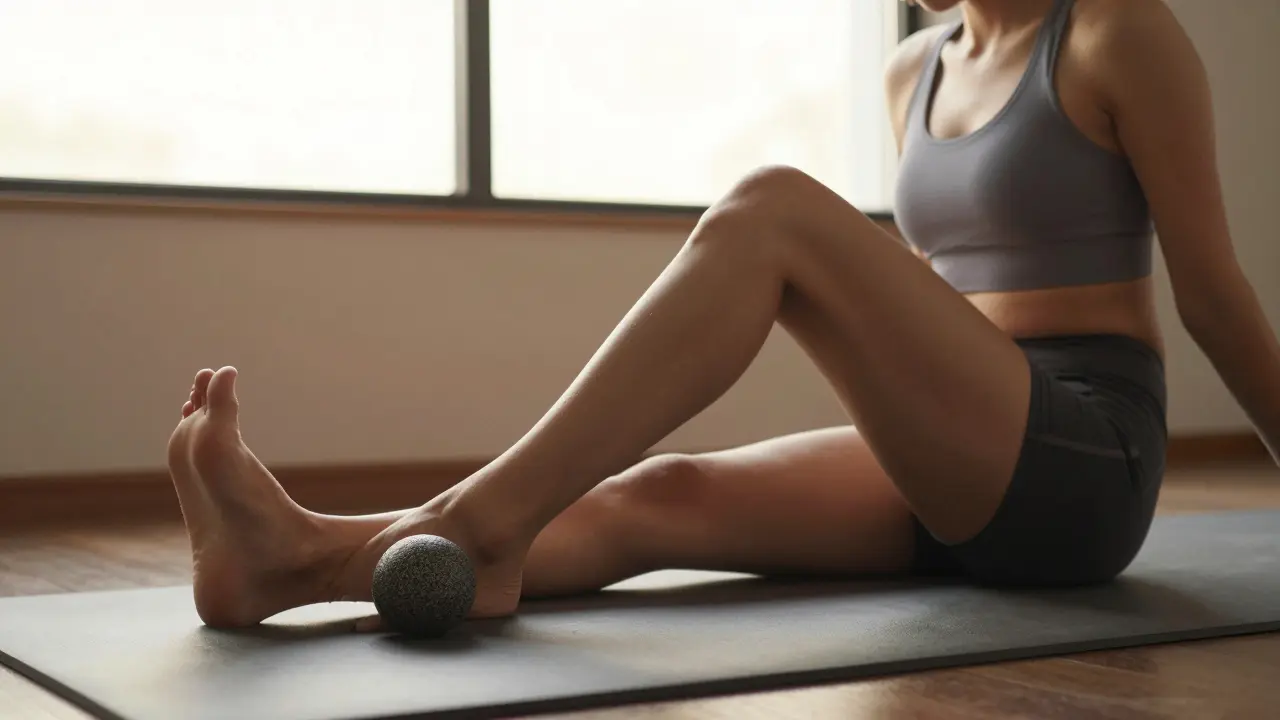
- Use a lacrosse ball under your foot, roll it slowly for 3 minutes while breathing deeply-not aggressively.
- For your hips, lie on your back, cross one ankle over the opposite knee, and gently pull the bottom leg toward your chest. Hold, but don’t force. Let the tension soften over 90 seconds.
These aren’t quick fixes. They’re slow rewires. You’re not trying to stretch a muscle-you’re trying to rehydrate and reorganize a whole network of tissue.
The Science Behind It
A 2023 study in the Journal of Sports Rehabilitation tracked 120 recreational runners over six months. Half did standard stretching routines. The other half added 15 minutes of fascia-focused work three times a week. The fascia group saw a 42% reduction in recurring injuries like shin splints and Achilles tendinitis. They also reported faster recovery times and improved stride efficiency.
Why? Because fascia stores and transfers force. When it’s stiff, your body compensates-shifting load to joints, tendons, or muscles that aren’t built for it. That’s how a tiny bit of tightness in your calf leads to knee pain months later.
How to Start (Even If You’re Busy)
You don’t need a gym or fancy gear. Just 10-15 minutes, three times a week, is enough to make a difference. Here’s a simple routine you can do after a run or before bed:
- Feet - Roll a tennis ball under each foot for 2 minutes. Focus on the arch and heel.
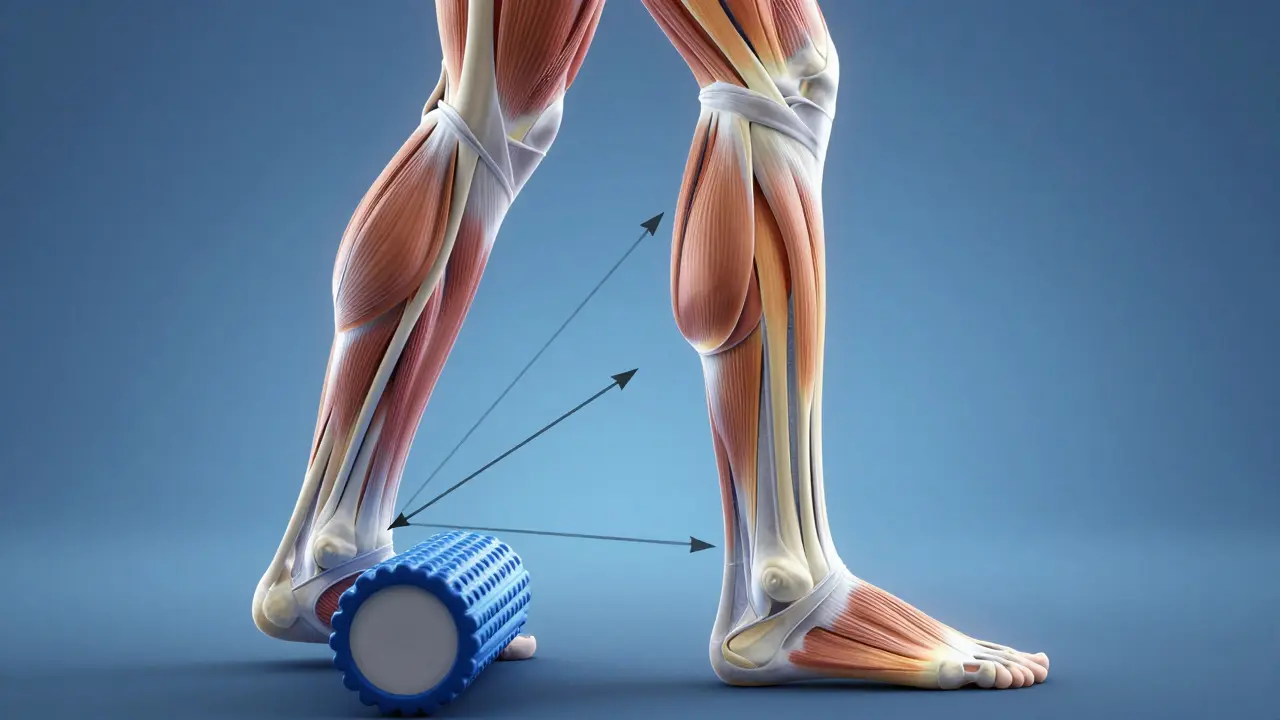
- Calf - Sit with your leg straight. Place a foam roller under your calf. Slowly roll from ankle to knee, pausing on any tender spots for 20 seconds while breathing out.
- Hips - Lie on your back. Cross one ankle over the opposite knee. Gently pull the bottom leg toward your chest. Hold for 90 seconds. Switch sides.
- Upper Back - Lie with a foam roller under your shoulder blades. Interlace your hands behind your head. Let your head drop back and breathe slowly for 1 minute.
Do this after every long run, or at least twice a week. Consistency beats intensity every time.
Common Mistakes to Avoid
Many runners think more pressure = better results. It doesn’t. If you’re wincing or holding your breath, you’re triggering a protective tension response. Fascia releases when you’re relaxed.
Another mistake? Doing it only after injury. Waiting until you’re in pain means your fascia is already stuck. The best time to work on it is when you feel fine. Prevention is way easier than repair.
And don’t skip hydration. Fascia is 70% water. If you’re not drinking enough, your tissue becomes dry and brittle. Aim for at least 2 liters a day-more if you’re running in heat or sweating heavily.
What Happens When You Stick With It
After 4-6 weeks of consistent fascia work, runners often notice:
- Less morning stiffness
- Longer, smoother strides without effort
- Faster recovery between hard runs
- Fewer random aches that used to pop up out of nowhere
One runner I know, a 52-year-old from Manchester, started this after a year of recurring plantar fasciitis. She didn’t change her mileage, her shoes, or her diet. Just added 12 minutes of fascia rolling three times a week. Within six weeks, she ran her first half-marathon in 18 months-pain-free.
Final Thought: It’s Not Optional Anymore
Running isn’t just about legs. It’s about the whole system. Ignoring fascia is like ignoring your engine’s oil filter. You can keep driving, but eventually, something breaks. For runners, that something is often injury, burnout, or quitting.
Fascia stretching isn’t a luxury. It’s maintenance. And if you want to keep running for years-not just seasons-it’s one of the smartest things you can do.
How often should I do fascia stretching as a runner?
At least three times a week, ideally after runs or before bed. Even 10-15 minutes makes a difference. If you’re recovering from an injury or training hard, aim for daily. Consistency matters more than duration.
Can I use a foam roller instead of professional massage?
Yes. Foam rollers, lacrosse balls, and even tennis balls work well for self-myofascial release. They’re not a replacement for professional therapy if you have chronic pain, but they’re excellent for daily maintenance. The key is slow, controlled movement-not rolling fast or aggressively.
Does fascia stretching help with knee pain?
Often, yes. Knee pain in runners is rarely caused by the knee itself. It’s usually from tightness in the hips, quads, or calves that pulls on the kneecap or IT band. Releasing fascia in those areas can take pressure off the knee. Many runners see relief within weeks of consistent work.
Is fascia stretching the same as yoga?
There’s overlap, but they’re not the same. Yoga focuses on flexibility, balance, and mindfulness. Fascia stretching is targeted at releasing stuck connective tissue through sustained pressure and slow movement. You can do fascia work in yoga poses, but the goal and technique are different.
What tools do I need to start?
Nothing fancy. A tennis ball, a foam roller, and your body weight are enough. You can start with just a tennis ball for your feet and a foam roller for your calves and back. As you get more serious, you might try a massage gun or a fascia-specific tool, but they’re not necessary.
Can fascia stretching prevent future injuries?
Absolutely. Studies show runners who include regular fascia work have 30-50% fewer recurring injuries. Tight fascia forces your body to compensate, which leads to overuse. Keeping it mobile reduces those compensations before they cause damage.